- +918826781614
- info@thedentalhome.in

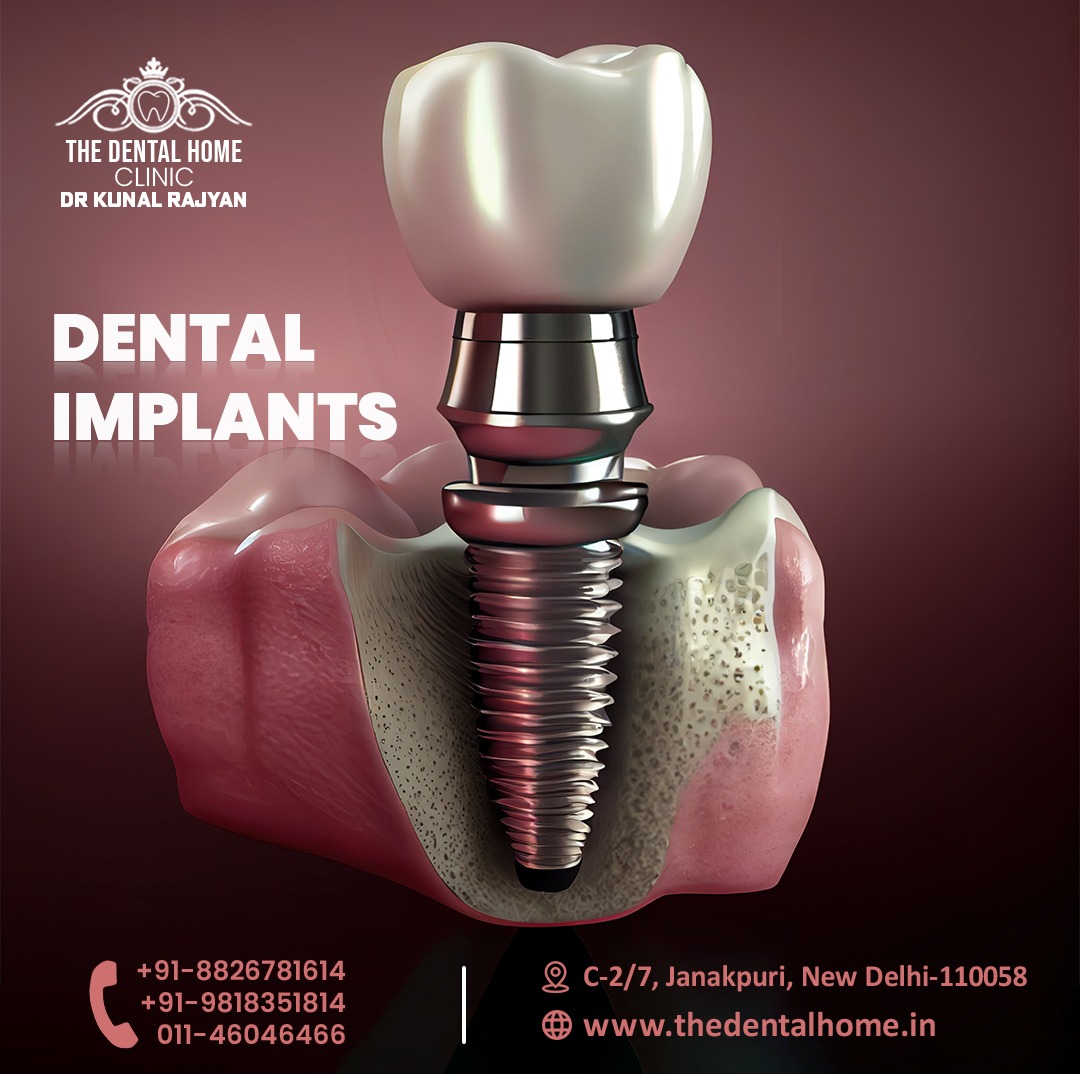
Missing teeth can affect much more than your smile. They may influence chewing, speech, and even the way neighbouring teeth function over time. Dental Implants Treatment in Greater Kailash offers a long-term tooth replacement option for many patients, but understanding the procedure, eligibility, and expected outcomes is essential before making a decision about restoring your smile.
Many people believe replacing a missing tooth is only about improving appearance. In reality, leaving a gap untreated for a long time may allow nearby teeth to shift and can gradually affect your bite. Learning about available treatment options early can help you make a better decision for your oral health.
A dental implant is an artificial tooth root, usually made from biocompatible titanium, that is placed into the jawbone to support a replacement tooth. Once the implant integrates with the bone, a customised dental crown is attached to restore the appearance and function of the missing tooth.
Unlike removable dentures, implants are fixed in place and are designed to function much like natural teeth when properly maintained.
Dental implants may be recommended for replacing a single tooth, multiple teeth, or even supporting full-mouth restorations in suitable cases.
Not everyone with a missing tooth automatically requires a dental implant. Before recommending treatment, several factors need to be evaluated, including:
Overall oral health
Gum condition
Jawbone quality and quantity
Number of missing teeth
Medical history
Lifestyle habits such as smoking
A thorough examination helps determine whether implants are the right choice or if another treatment option may be more appropriate.
Some people adapt to chewing from one side or simply ignore a missing tooth if it is not visible while smiling. However, missing teeth can have long-term effects.
These may include:
Difficulty chewing certain foods
Shifting of adjacent teeth
Bite imbalance
Changes in facial appearance over time
Increased stress on remaining teeth
Replacing missing teeth helps support overall dental function while maintaining better oral balance.
Many advertisements present dental implants as the answer for every missing tooth. While implants offer significant advantages, they are not automatically the best treatment for every patient.
In some situations, preserving a damaged natural tooth may be a better option than replacing it. A healthy natural tooth, when treatable, is often worth saving.
The right treatment should always follow a detailed diagnosis rather than a predetermined procedure.
Successful implant treatment begins long before the implant is placed.
Proper planning generally includes:
Clinical examination
Dental X-rays or 3D imaging when required
Bite assessment
Evaluation of bone support
Discussion of treatment expectations
Careful planning helps improve treatment precision and supports long-term success.
At The Dental Home Clinic, every implant treatment plan is designed after understanding each patient's oral health, functional needs, and treatment goals instead of following a standard approach for everyone.
One reason dental implants have become increasingly popular is their ability to provide stable tooth replacement when supported by proper oral hygiene and regular dental care.
According to the American Academy of Implant Dentistry, millions of dental implants are placed worldwide each year, and the demand continues to grow as patients look for reliable tooth replacement options that restore both function and confidence.
While implants are highly successful, long-term results also depend on routine dental visits and daily oral care.
Many patients focus only on the final result without understanding that healing is an important part of implant treatment.
The implant needs time to integrate with the surrounding jawbone before the final restoration is placed. Following your dentist's instructions during this period supports proper healing and reduces unnecessary complications.
Every patient's recovery timeline is different, depending on individual healing and treatment requirements.
Dental implants require care similar to natural teeth.
Maintaining them involves:
Brushing twice daily
Cleaning between teeth regularly
Attending scheduled dental check-ups
Avoiding tobacco whenever possible
Following professional cleaning recommendations
Good oral hygiene plays an important role in protecting both the implant and surrounding gum tissue.
With proper care, dental implants can remain functional for many years. Their longevity depends on oral hygiene, gum health, and regular dental follow-ups.
The procedure is usually performed under local anaesthesia, making it comfortable for most patients. Mild discomfort during recovery is generally manageable with professional guidance.
Suitability depends on several factors, including bone health, gum condition, overall medical history, and a detailed dental examination.
Replacing a missing tooth is not only about appearance—it also supports better chewing, speech, and long-term oral health. Choosing the right treatment begins with understanding your options and receiving personalised guidance.
If you are exploring Dental Implants Treatment in Greater Kailash, get in touch with The Dental Home Clinic for a comprehensive evaluation and a treatment plan tailored to your individual dental needs. Taking the right step today can help you enjoy a healthier, more confident smile for years to come.
Meta Description: Discover everything about Dental Implants Treatment in Greater Kailash, including benefits, eligibility, recovery, and how implants restore your smile.
| Tags: | #Dental Implants Treatment in Sarita vihar, # Dental Implants Treatment in Chirag Delhi, # Dental Implants Treatment in Saket, # Dental Implants Treatment in Pancsheel Park |

 WhatsApp Us
 Get Direction